Moved one CTA. 11× growth.
The win came from re-defining activation. The CTA move was the consequence, not the cause.
01Context
Email integration was hidden behind two clicks. 0.3% of new users connected. The easy fix was a more discoverable CTA. We didn't take it.
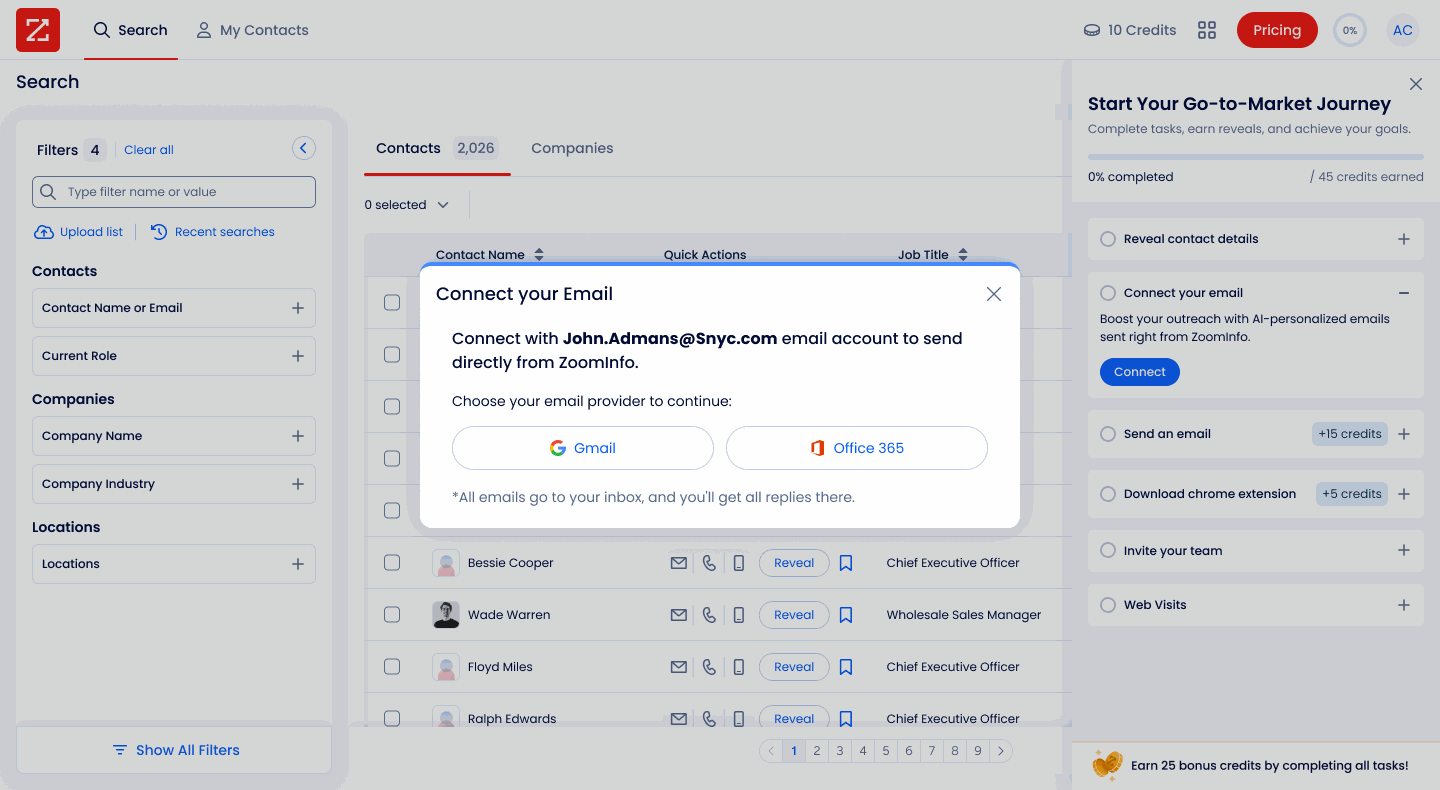
Before · email connect lived in-product: a popup two clicks deep, reached from the go-to-market checklist rail.
02My Role
Team lead. Owned the activation definition across the surface, the call to put a new step into onboarding, and the staged rollout that proved it was safe.
03The Bet
The bar for "activated" was too low. Move it to "email sent" instead of "email connected." Senders were +294% more likely to visit pricing.
04Decisions That Mattered
Re-defined activation around behavior with downstream signal.
"Email sent" became the milestone, not "connected." Optimizing for the action that earned revenue, not a vanity step.
Added email connect as a first-class onboarding step.
PLG default says keep onboarding short. We made it longer on purpose — because the right activation moment was downstream of connection.
Staged rollout: 50% → 100%.
Tested at 50% to prove no hit to completion rate. Then to 100%. Discipline over hope.
Tied to a 3-phase model: Reveal → Reach Out → See Results.
Email integration was the gate to phase 2. We restructured what onboarding was for.
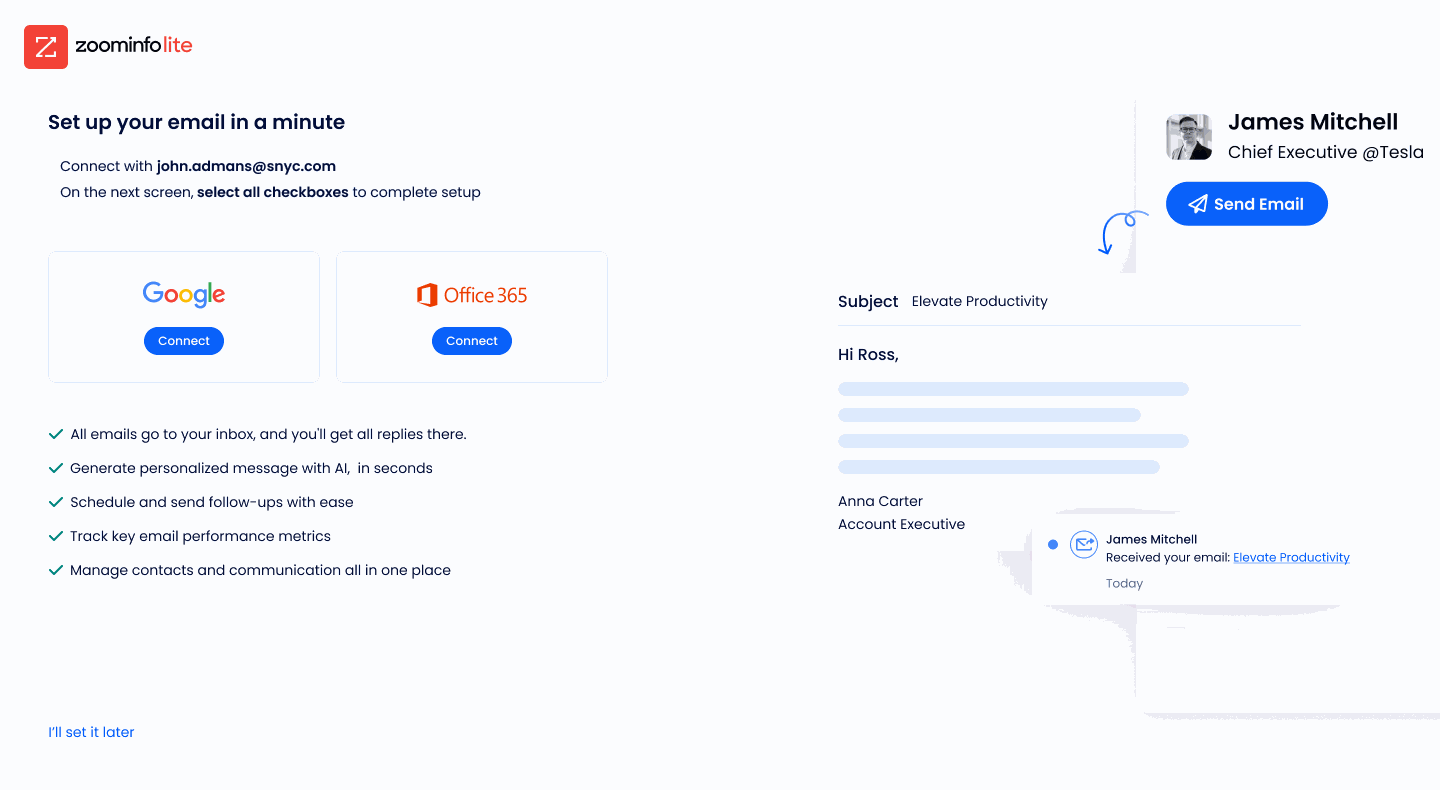
After · the new onboarding step: "Set up your email in a minute." The value spelled out in five lines, one-click connect, and a skip for later. This step drove 96% of new connections.
05Outcome
Aug at 50%: 0.7% → 12.6%, no hit to onboarding completion. Sep at 100%: 11× growth (0.3% → 3.3%), 96% of new connections driven by onboarding.
New-user email connection rate · before vs. after
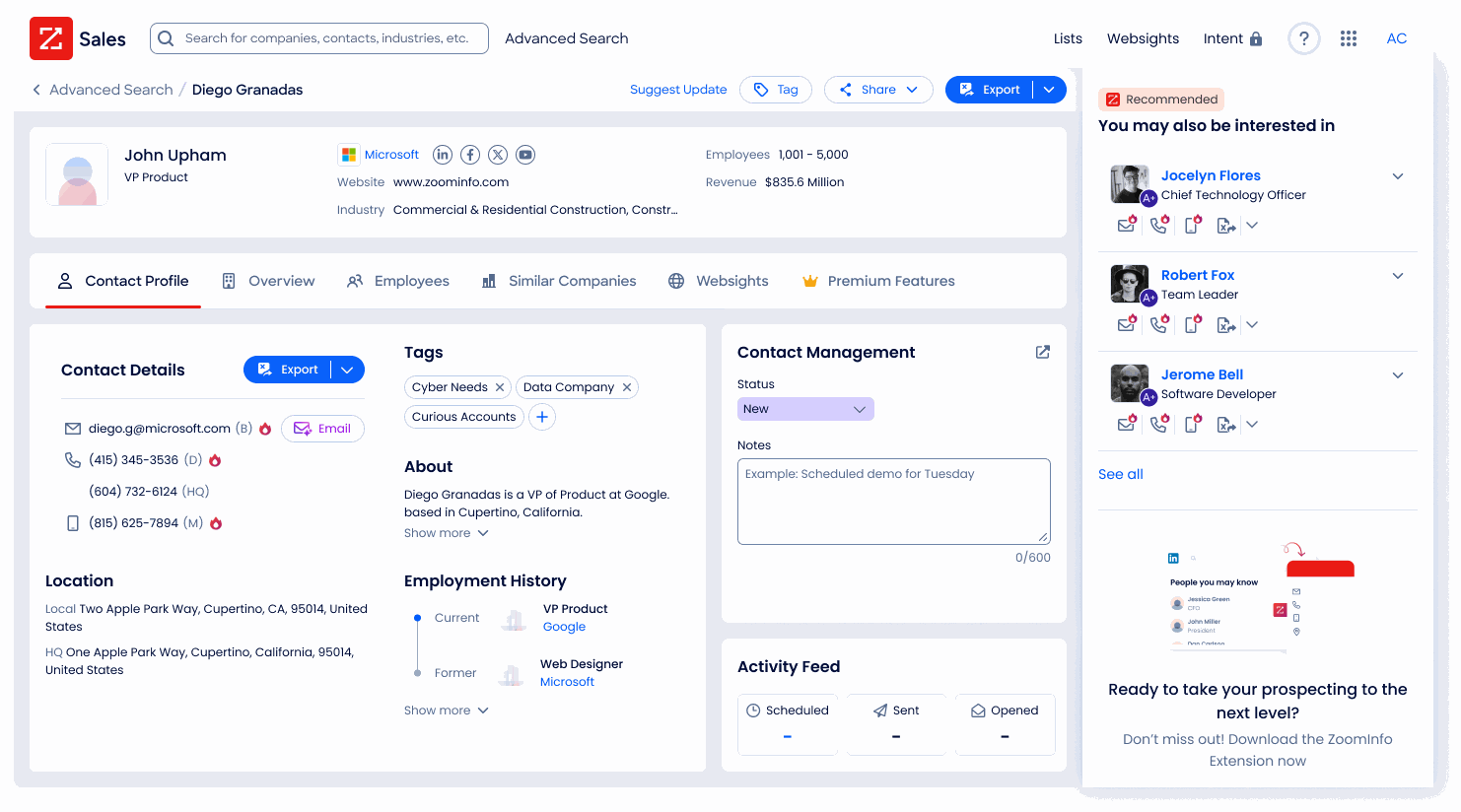
The tie-in · contact profile before engagement: the activity feed sits empty.
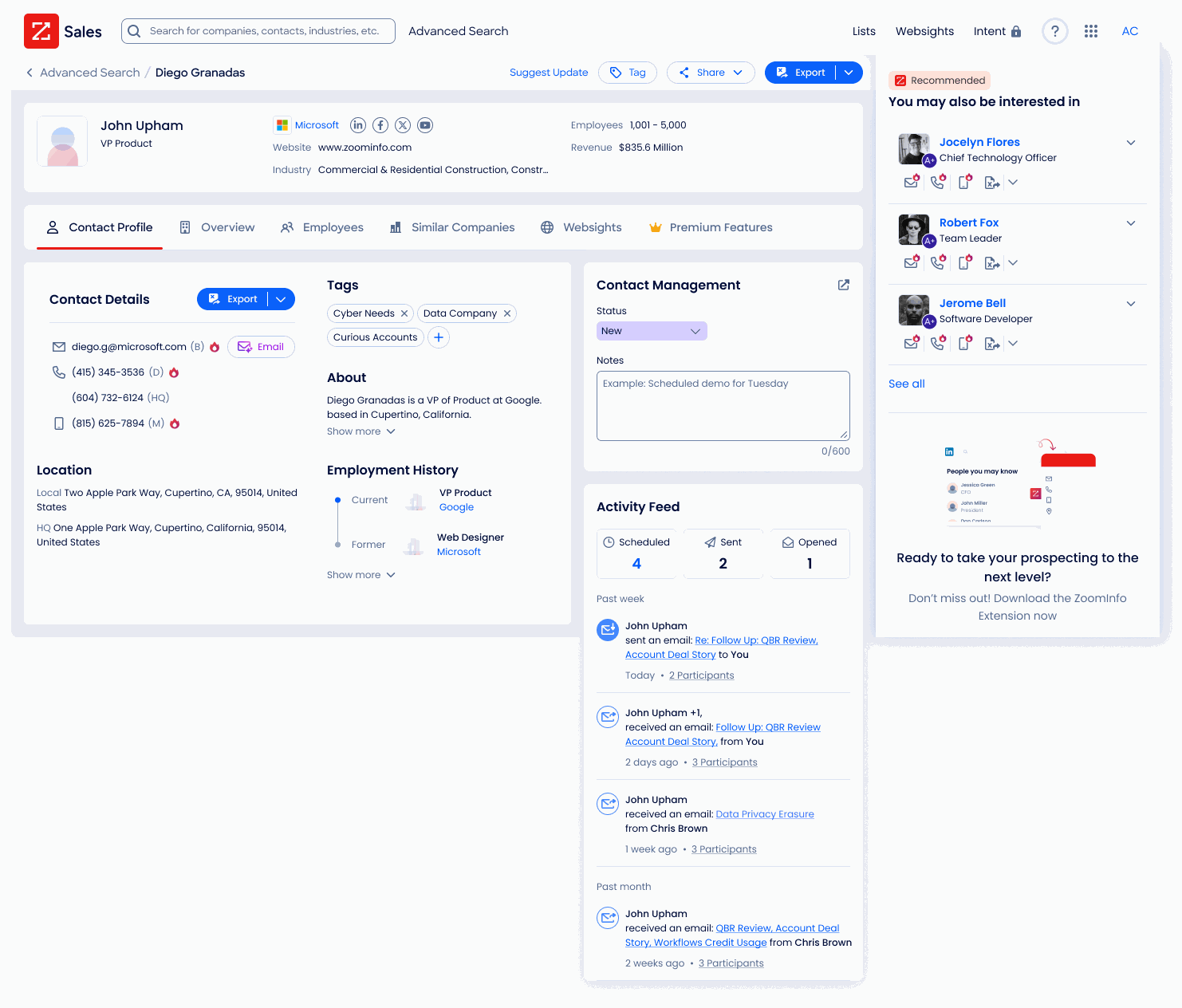
After engagement · the same profile with email metrics living in the product: scheduled, sent, opened, replied.
06What I'd Do Differently
Optimized for "email connected" for too long before realizing it was a vanity step. Before you set an activation milestone, make sure it actually correlates with the downstream metric you care about.