Ever-present onboarding checklist
A right-rail drawer on every signed-in page that guides first-time users to their first wins, then gets out of the way for good.
The drawer · faithful recreation of the spec (not a raw screenshot)
01Context
First-time NeverBounce users land in a product they don't yet understand. The four first-week actions, verify email, upload a first list, connect an integration or API, and send a referral invite, are where activation happens, but there was no persistent guide carrying users to them. (Funnel numbers are TBD, flagged for analytics; none are invented here.)
02The bet
A right-rail collapsible drawer, present on every signed-in page, that walks a new user from zero to four of four, then disappears for good.
03Decisions that mattered
Check on actions, never a timer.
Items auto-complete on real events: email verified, list uploaded, integration connected. The checklist always reflects what the user actually did, so it never lies about progress.
Collapse, but don't dismiss.
Users can tuck the drawer to a tab, but can't fully dismiss it until four of four are done. The guidance stays until it has done its job. (Ori's call.)
No reward promises in the copy.
The referral credit mechanic lives on the referral page, not in the checklist. The completion copy doesn't dangle credits for finishing, because tying the reward to the checklist would distort the behavior. (Ori's pivot.)
Gone at four of four, forever.
Not on day N, not on a schedule. Once a user is activated, the drawer is gone for good. It earns its place by leaving.
04The directions Maya explored
Before converging on the shipped drawer, Maya generated six directions, varying the framing, the progress signal, and how much it showed at once. Same four actions, different bets on what would get a tired first-time user to act.
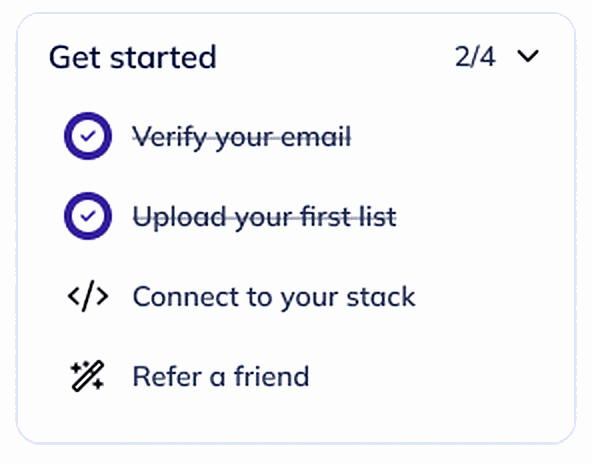
Compact. Titles only, no progress, smallest footprint.
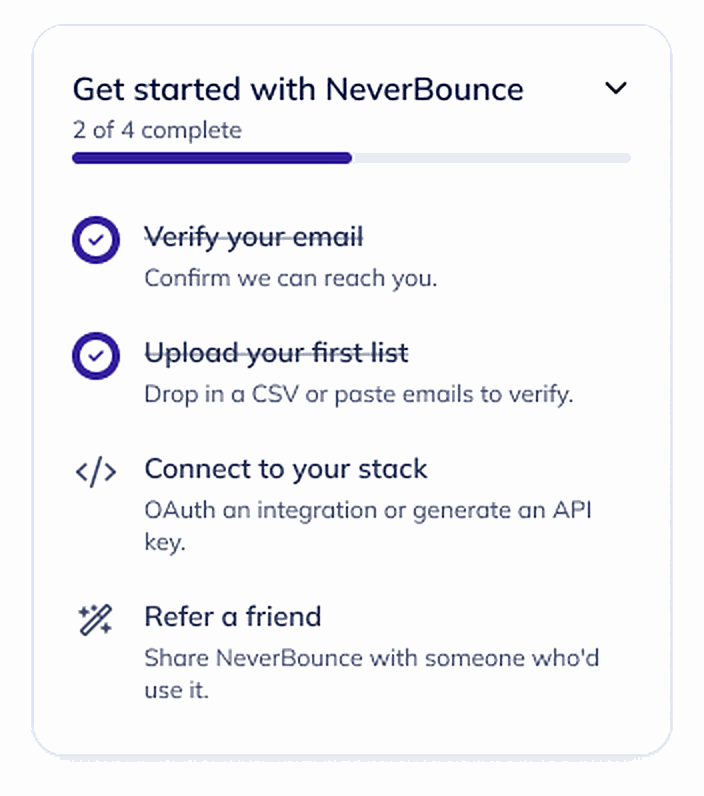
Progress bar. A filled bar plus a one-line why under each step.
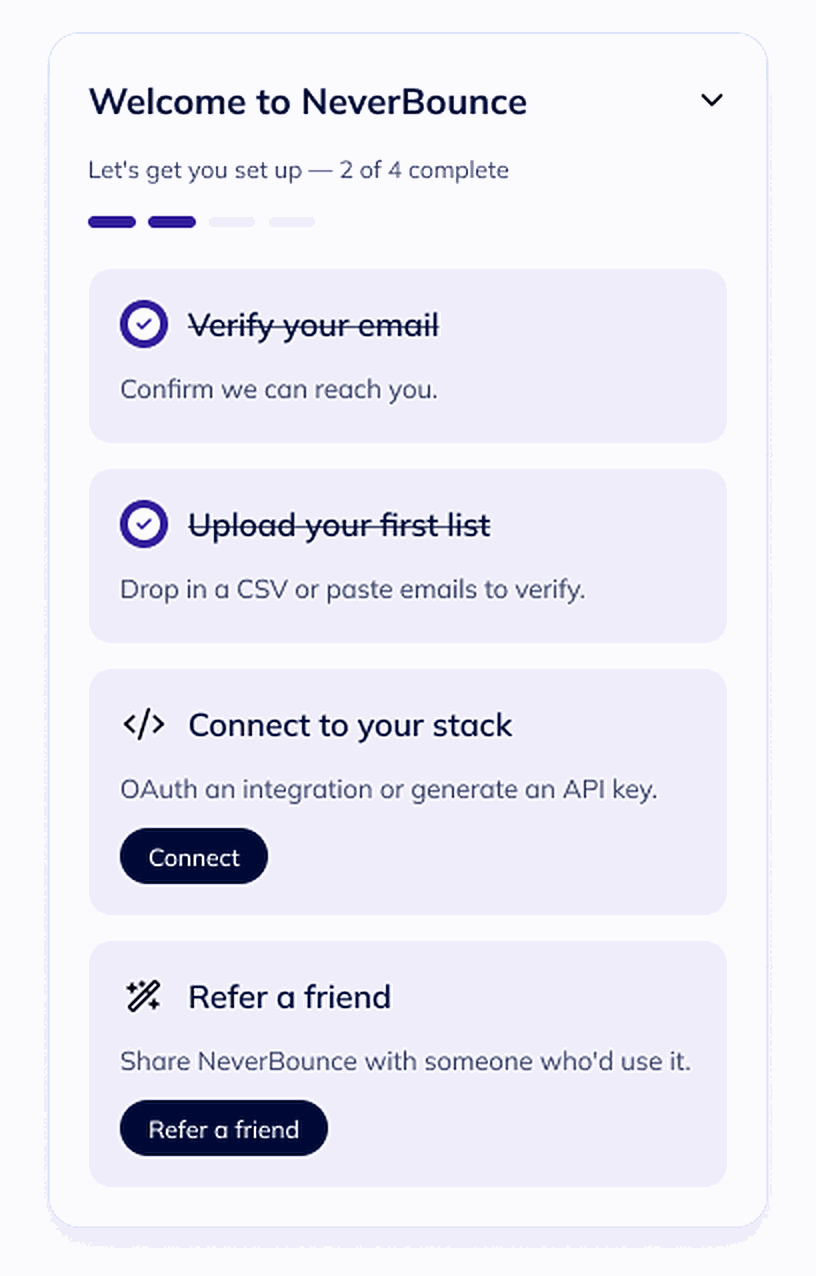
Segmented + inline actions. Step dots, with Connect and Refer buttons in the list.
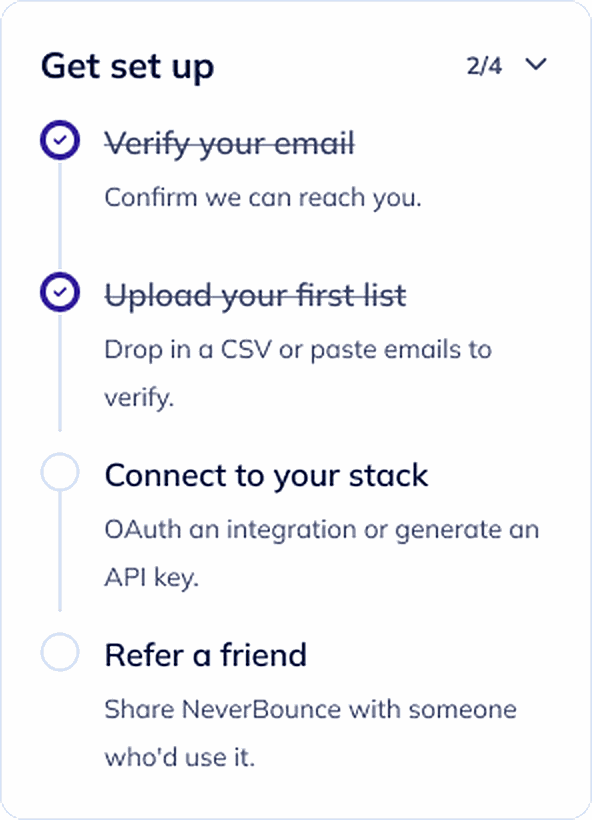
Timeline. A connector line down the steps, so it reads as a path.
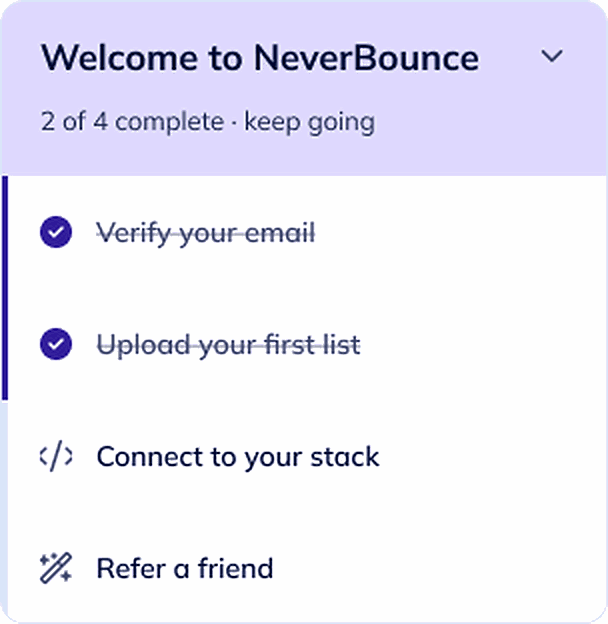
Encouraging header. A colored band and a "keep going" nudge.
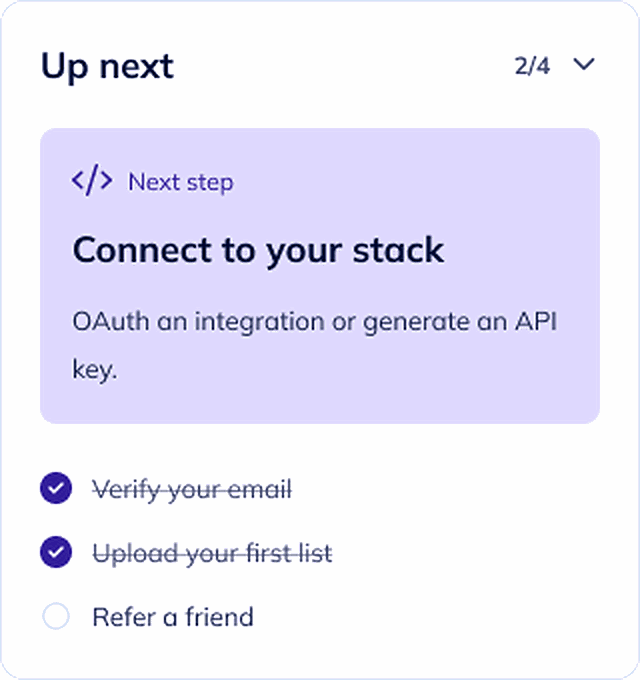
Focus mode. Surfaces only the next step; completed ones collapse.
05Outcome, one quarter in
A quarter after launch: a 13% increase in completion of the first three steps, and more users returning in weeks 2 and 3. That early-activation lift translated into a 6.1% conversion uplift downstream. The checklist did its job, getting first-time users to their early wins, and retention and conversion moved with it.